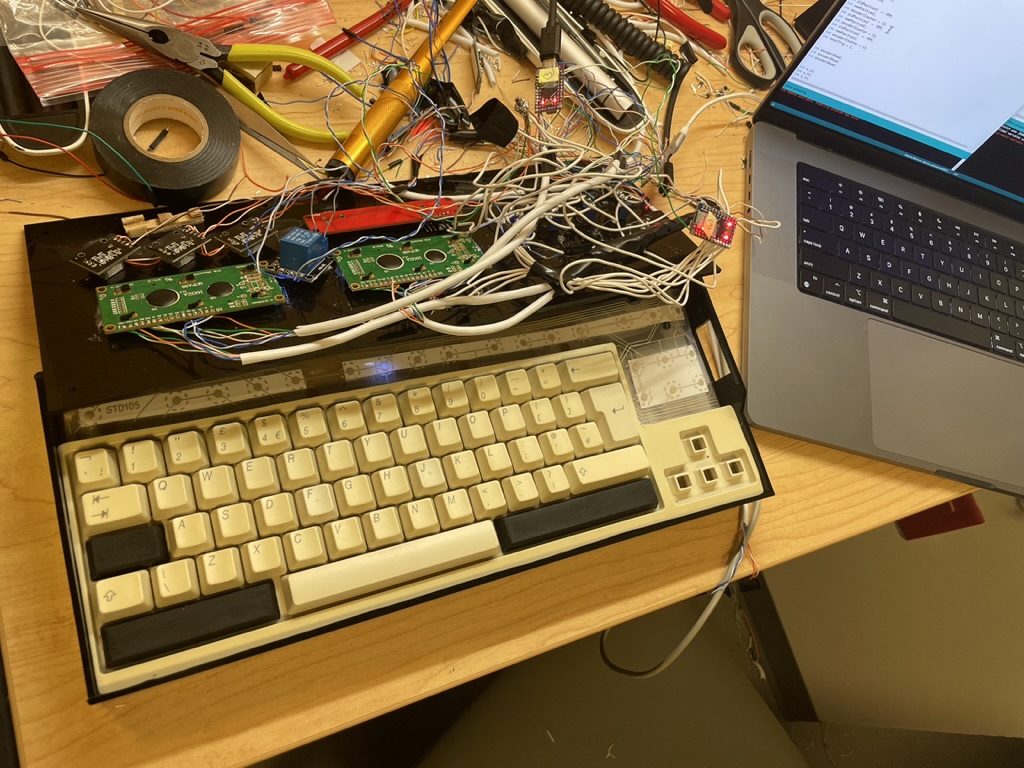






Project Description
The Enigma, a cipher machine used in World War II, produced near-unbreakable encryption through an enormous number of configurations and continuously changing keys. In the 20th century, Enigma served warfare. In the 21st century, it can serve a different purpose: personal data encryption.
Today, our personal information is stored by tech companies through countless services. They promise data protection, but as the value of data increases, those guarantees may weaken. Some companies already profit by selling user data. The larger issue is that data is often collected even without explicit consent, meaning that even private acts like writing personal thoughts in a digital notebook may not remain safe in the future.
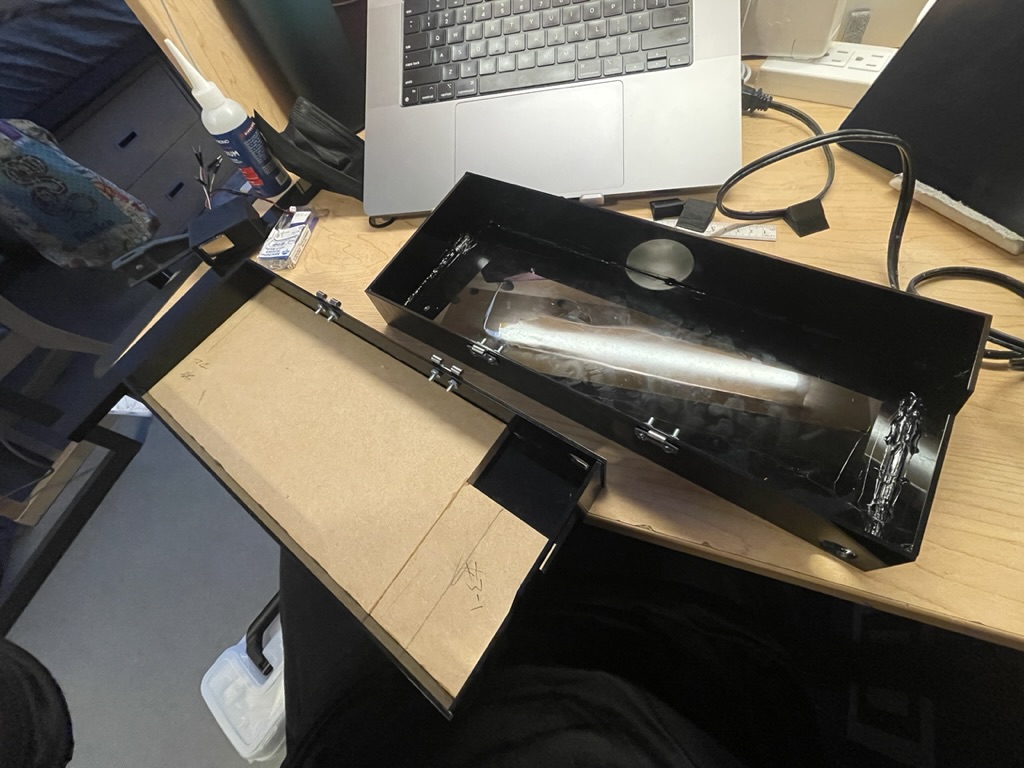
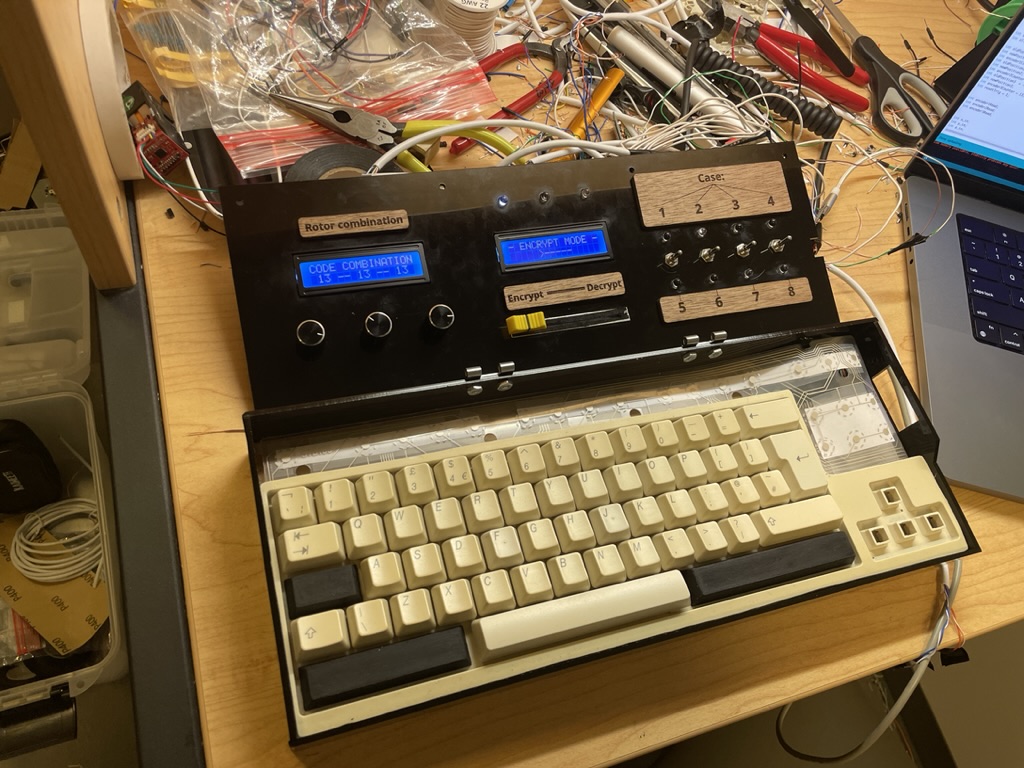
21C Enigma Machine is a response to this concern. It encrypts text locally before it reaches a PC/laptop, making the stored content unreadable without the correct recipe. Building on Enigma’s original configuration logic, it generates up to 1.4M encryption cases to strengthen security.
1.4M Encryption Cases
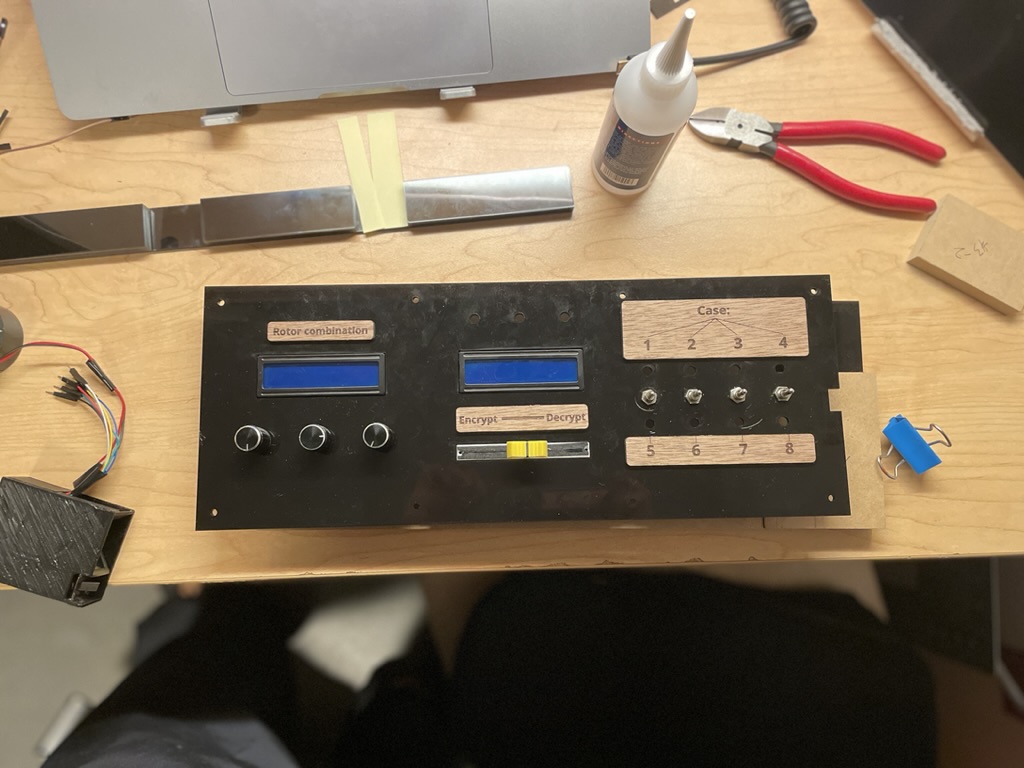
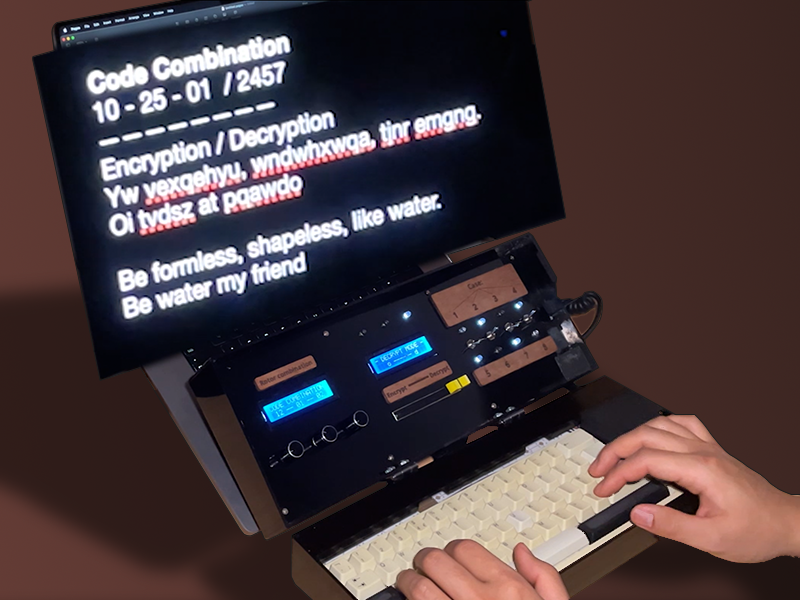
The user centers the slider to enter "Set Mode", then configures an encryption recipe using 3 rotary encoders and 4 switches. In "Encrypt Mode", any typed text is automatically encrypted and sent to the PClaptop. The rotors advance with each character, continuously changing the encryption combination.
To decrypt, the user re-enters the same recipe, switches to "Decrypt Mode", and inputs the encrypted text. The system then outputs the original plaintext.
How Enigma Works
Each rotor is a one-to-one substitution mechanism that permutes the alphabet. By chaining 3 rotors in series, it produces 26 × 26 × 26 combinations.
To validate and better understand this logic, I created a physical cipher sheet and tested the mappings manually.
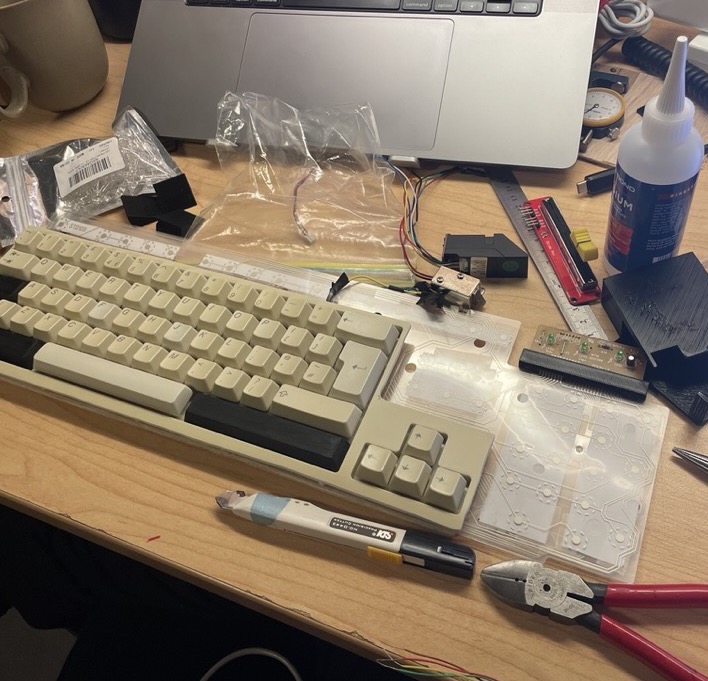
Mitsumi Keyboard Up-cycling
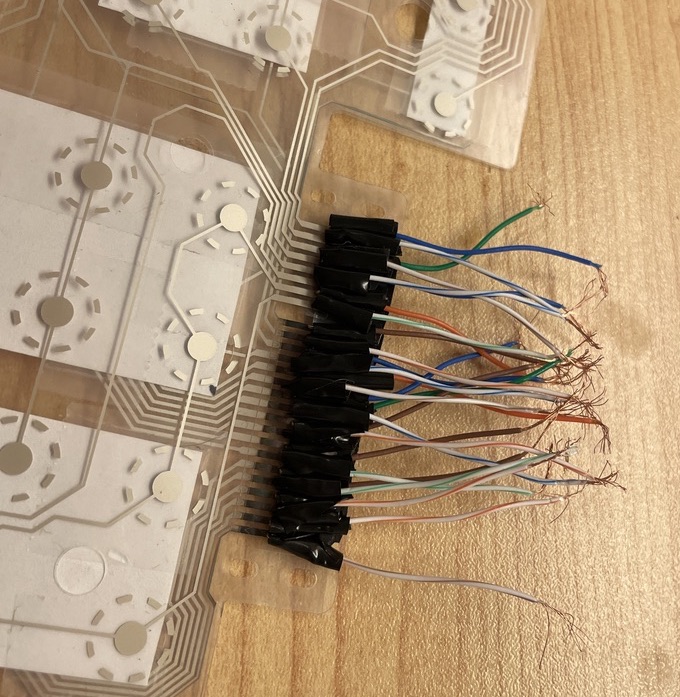
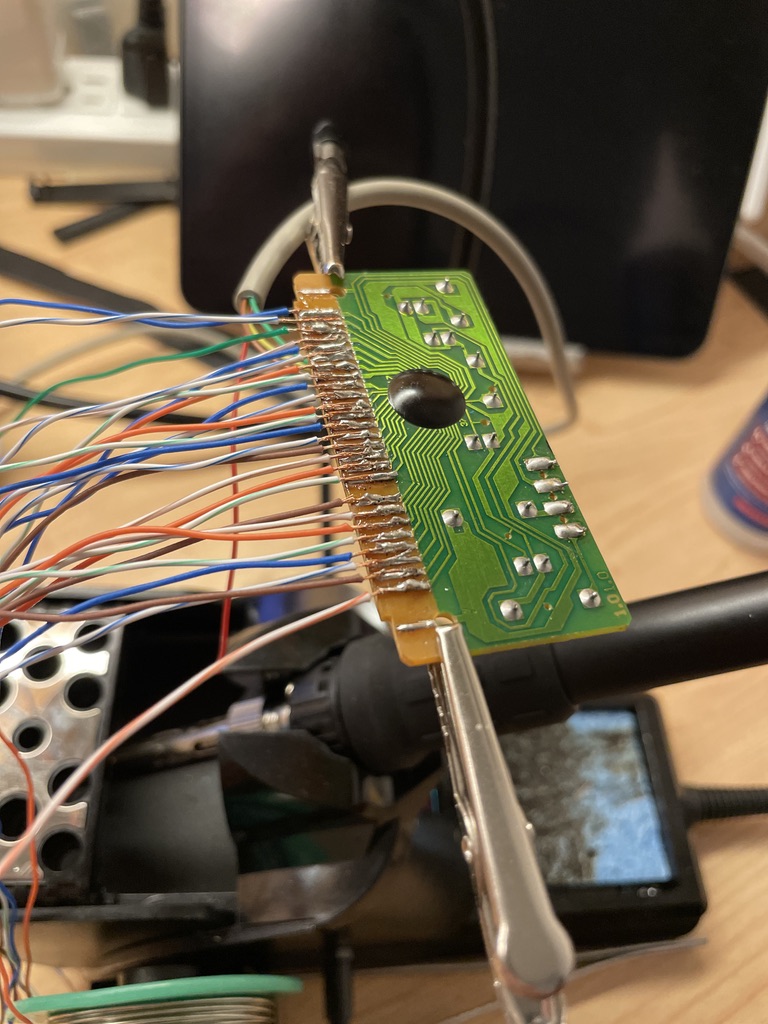
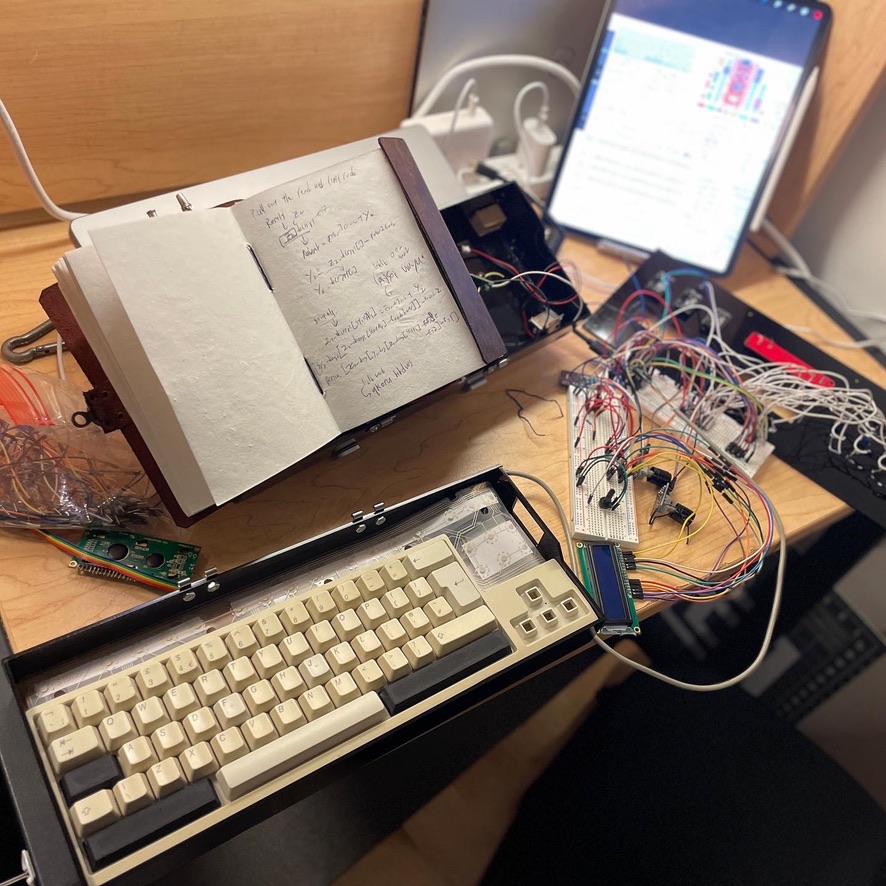
Removed parts of the housing/mounting of the keyboard. Because it was a membrane keyboard, modifying the switch matrix was straightforward. After removing the original PCB connection section, I extended the contacts using pin headers, allowing the keyboard to fit the case without requiring additional space redesign.